A BJJ belt represents years of work — yet proving it to a new gym or event organiser still relies on a photo, a handshake, or a faded paper certificate. Compteam generates a cryptographically signed PDF with a QR code anyone can verify in seconds.
The problem: a belt with no paper trail
Brazilian jiu-jitsu takes rank seriously. A black belt can represent a decade or more of training. Yet when an athlete moves city, changes gym, or registers for a competition, the proof of their rank is usually... a photo, a word-of-mouth introduction, or a faded certificate from a ceremony years ago.
None of those are verifiable. A screenshot can be edited in seconds. A paper certificate can be forged or simply lost. For a sport that places such weight on lineage and legitimacy, the supporting evidence is surprisingly easy to fake — and surprisingly hard to check.
Rank matters more when athletes can prove it without relying on memory, screenshots, or faded paper.
What Compteam generates
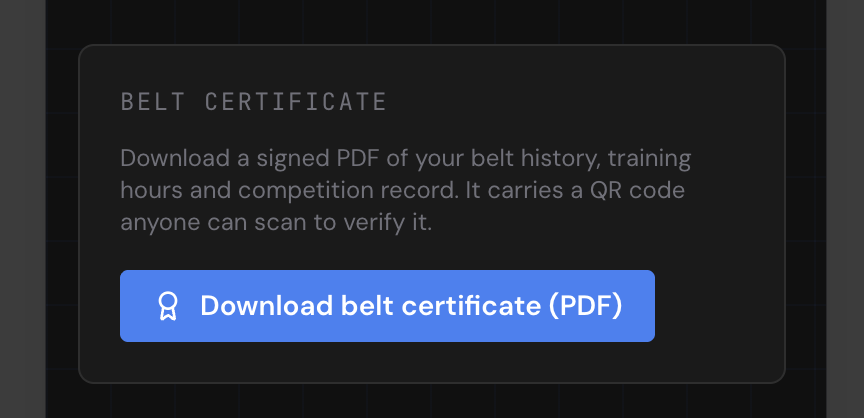
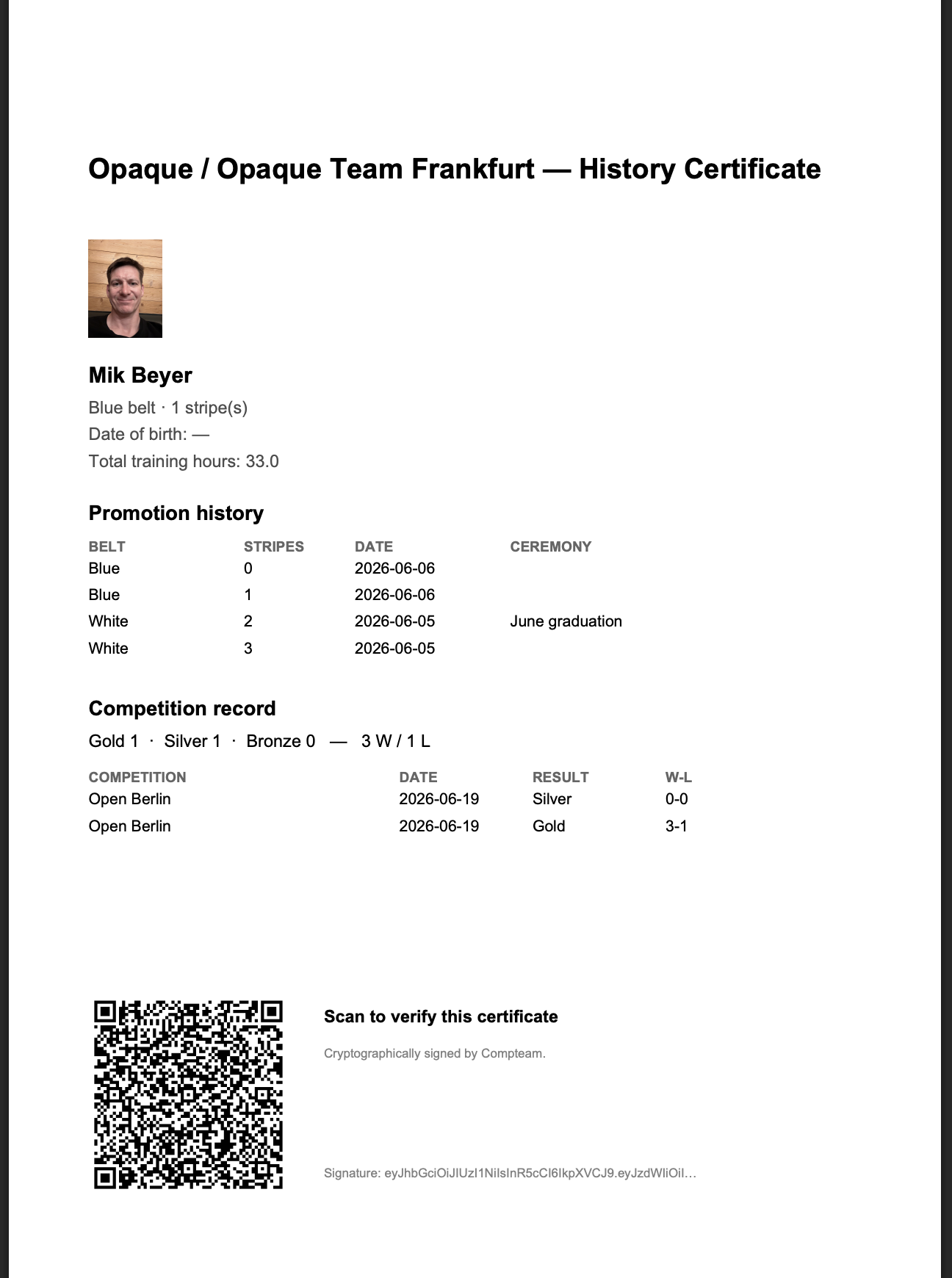
Any athlete with a Compteam profile can export a belt history certificate as a single PDF. It contains:
- Full name and date of birth — identifying the holder.
- Address — for formal records.
- Current belt and stripe count.
- Complete promotion history — every belt and stripe, with the date awarded and the awarding ceremony.
- Total training hours — confirmed mat attendance plus any imported historical hours.
- Competition record — medals won (gold, silver, bronze) and overall win/loss tally, with a per-event breakdown.
It is a clean, presentable document an athlete can hand to a new instructor, attach to an event registration, or simply keep as a record of their journey.
The certificate is not just a PDF. It is a signed snapshot of the athlete's rank, training, and competition history.
How the QR verification works
The interesting part is the QR code printed on every certificate.
When Compteam generates the PDF, it signs the document with a cryptographic signature tied to the athlete's record. That signature is encoded into a QR code (and a link). Anyone — a coach at another gym, an event organiser, a federation — can scan it with a phone.
The QR code turns rank verification from "trust me" into "scan this."
The QR opens a public verification page that re-checks the signature against a snapshot stored at certificate creation time and displays the athlete's name, belt, training hours and competition record exactly as they were when the certificate was generated. If the document is genuine, the page shows a green "Certificate verified" badge.
Because verification checks against a stored, cryptographically signed snapshot, the data on screen reflects exactly what was printed — not the athlete's current standing. If anyone alters the PDF and the QR scan no longer matches, the verification page shows a clear "Tampered / Invalid" warning.
Who benefits
- Athletes moving gyms can prove their rank instantly instead of starting conversations from scratch.
- Event organisers can confirm a competitor's belt before accepting a registration, reducing sandbagging disputes.
- Instructors can issue trustworthy, professional records to their students — reinforcing the gym's credibility and the legitimacy of its lineage.
It turns a belt from an unverifiable claim into something an athlete genuinely owns and can prove.
Frequently asked questions
Can a Compteam belt certificate be faked?
No. The PDF is cryptographically signed, and the QR code links to a verification page that re-checks the signature against a stored snapshot. Any alteration to the document or the link causes verification to fail. Even altering the printed text while leaving the QR intact is caught — the scan compares the document against the stored snapshot and flags any mismatch as Tampered / Invalid.
Does the verification link expire?
No. Belt rank is a permanent achievement, so the certificate's signature is designed to validate indefinitely.
What information does the verification page show?
It shows whether the signature is valid, plus the athlete's full name, belt, latest promotion date, total training hours and competition record — read from the snapshot stored at the time the certificate was generated.
Want verifiable progression records for your athletes? See how Compteam tracks belts, training and competitions.